


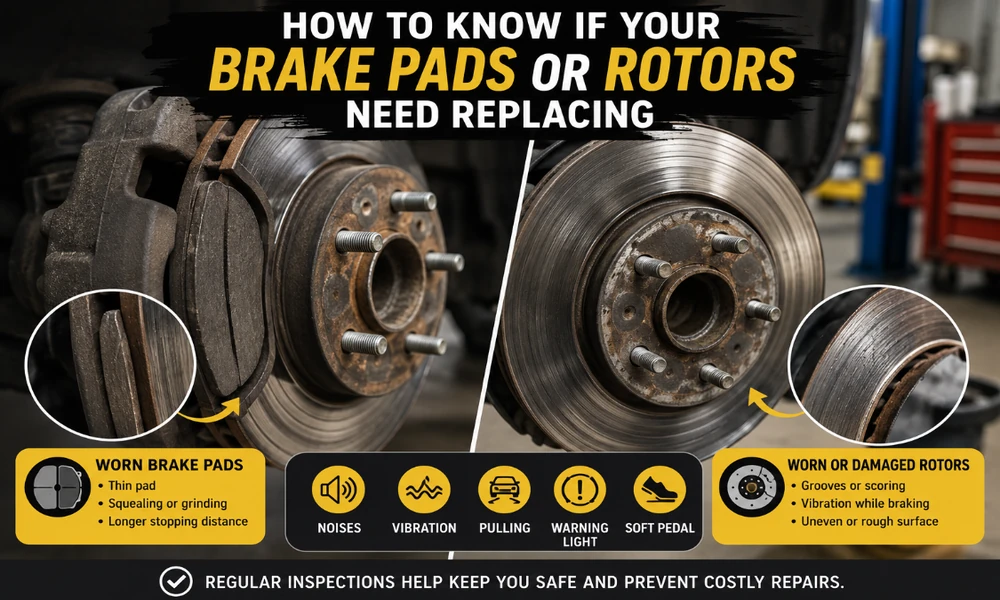
Brakes usually give warning signs before they stop working properly. Sometimes the signs are obvious, like a loud grinding noise. Other times, the changes are small. The pedal may feel different, the steering wheel may shake, or the vehicle may take a little longer to stop.
Knowing whether the problem comes from the brake pads, the rotors, or both can help you respond before the damage gets worse.
Listen for Squealing or Grinding Noises
One of the most common signs of worn brake pads is a high-pitched squealing sound.
Many brake pads include a small wear indicator. When the pad material becomes thin, the indicator touches the rotor and creates a warning noise. The sound may happen every time you brake or only during certain stops.
Grinding is more serious.
A grinding noise may mean the brake pad material is completely worn away and metal is rubbing against the rotor. This can damage the rotor quickly and reduce braking performance.
If you hear grinding, it is best to avoid unnecessary driving until the brakes are inspected.
Pay Attention to Brake Pedal Changes
The brake pedal should feel firm and predictable.
If it feels soft, spongy, or travels farther toward the floor than normal, there may be a problem with the braking system. Worn brake pads can sometimes contribute to increased pedal travel, although low brake fluid, air in the lines, or a hydraulic issue may also be responsible.
A pedal that pulses under your foot can point to uneven or warped rotors. The pulsing may become stronger when braking from higher speeds.
Any sudden change in pedal feel should be checked as soon as possible.
Watch for Vibration While Braking
Vibration is another common sign of rotor trouble.
When rotors wear unevenly or develop excessive heat damage, the brake pads may no longer press against a smooth surface. This can cause shaking in the steering wheel, pedal, or entire vehicle.
The vibration may be mild at first. You might only notice it when slowing down on the highway. Over time, though, it can become more noticeable.
Wheel balance and suspension issues can also cause shaking, but vibration that mainly happens during braking often points to the brake system.
Notice If the Vehicle Pulls to One Side
A vehicle that pulls left or right while braking may have uneven brake wear.
One brake pad may be more worn than the one on the opposite side. A sticking brake caliper can also cause one wheel to brake harder than another.
This problem can make the vehicle feel unstable, especially during sudden stops or wet driving conditions.
Pulling should not be ignored because it may affect steering control and stopping distance.
Check for Longer Stopping Distance
Worn brake pads reduce the amount of friction available to slow the vehicle.
You may notice that the car takes longer to stop or requires more pressure on the pedal. The change can happen slowly, which makes it easy to overlook.
Think about how the brakes normally respond. If you have to press harder than before or begin braking earlier, the pads or rotors may need attention.
Longer stopping distances can be especially dangerous in heavy traffic or during emergency situations.
Look at the Brake Warning Light
Some vehicles have dashboard lights that indicate brake wear or a general braking system problem.
A brake warning light may also appear when the parking brake is engaged, the brake fluid is low, or another issue is present. The light does not always mean the pads are worn, but it should not be ignored.
Check the owner’s manual to understand what the warning light means for your vehicle.
Inspect the Brake Pads and Rotors
In some vehicles, part of the brake pad can be seen through the wheel.
Brake pads that appear very thin may be close to replacement. A technician can measure the remaining pad thickness more accurately.
Rotors should also be checked for:
- Deep grooves
- Cracks
- Blue or dark heat spots
- Uneven surfaces
- Heavy rust
- Thickness below the safe limit
Some rotors can be resurfaced, but many modern rotors are replaced when they become too thin, damaged, or uneven.
Do Brake Pads and Rotors Need Replacement Together?
Not always.
Brake pads often wear out before rotors. If the rotors are smooth, thick enough, and within the manufacturer’s specifications, only the pads may need replacement.
However, damaged or heavily worn rotors can shorten the life of new pads and create poor braking performance. In that case, replacing both may be the better option.
Do Not Wait for Complete Brake Failure
Brake wear usually develops gradually. That gives drivers time to notice the warning signs and schedule repairs.
Squealing, grinding, vibration, pulling, and longer stopping distances are all signs that something may be wrong. The earlier the brakes are inspected, the more likely it is that the problem can be handled before additional parts are damaged.
Regular brake checks help support safer driving, smoother stops, and more reliable vehicle performance.
This post was written by a professional at Tires2Go Florida. Tires2Go Florida is a trusted automotive service center located in Pinellas Park, Florida, serving drivers across St. Petersburg, Tampa, Clearwater, and Largo. Our certified mechanics handle auto repair Clearwater, tire and wheel replacement, brake service, suspension repairs, oil changes, wheel alignments, tire balancing, and road force balancing. We also specialize in ADAS calibration, suspension modifications, lift kits, and lowering kits using quality parts and modern diagnostic equipment. From routine maintenance to advanced automotive services, Tires2Go Florida provides dependable solutions and tires for sale for vehicles throughout the Tampa Bay area.


